Pop art pet portrait
To make a pop art pet portrait, upload one clear photo of your pet and choose the Pop art style. Then the painter redraws your pet as a 1960s screen print. It uses four flat loud colors, heavy black shadows, halftone dots in the mid tones and a single bright yellow background.
By The Easelpaw team (Product and testing). Last updated .
1. Your pet photo
JPG, PNG or WebP up to 12 MB
One pet, face toward the camera, good light.
We delete your photos as soon as the picture is made. Only upload photos of yourself or of people who agreed to it.
How to make a pop art pet portrait, step by step
- First, pick a photo with strong contrast and a clear outline of the head.
- Then upload it as a JPG, PNG or WebP, up to 12 MB.
- Next, choose Pop art in the style picker.
- After that, look at the free preview and check the markings.
- Finally, spend one credit for the clean HD file and print your poster.
The first 2 previews each day are free. After that, see the pricing page for packs and plans, or read how we test the tool.
Pop art pet portrait tested with a real photo
We sent our own test photo through the same style prompt this page uses. So compare the photo with the portrait that came back, and judge the likeness yourself.
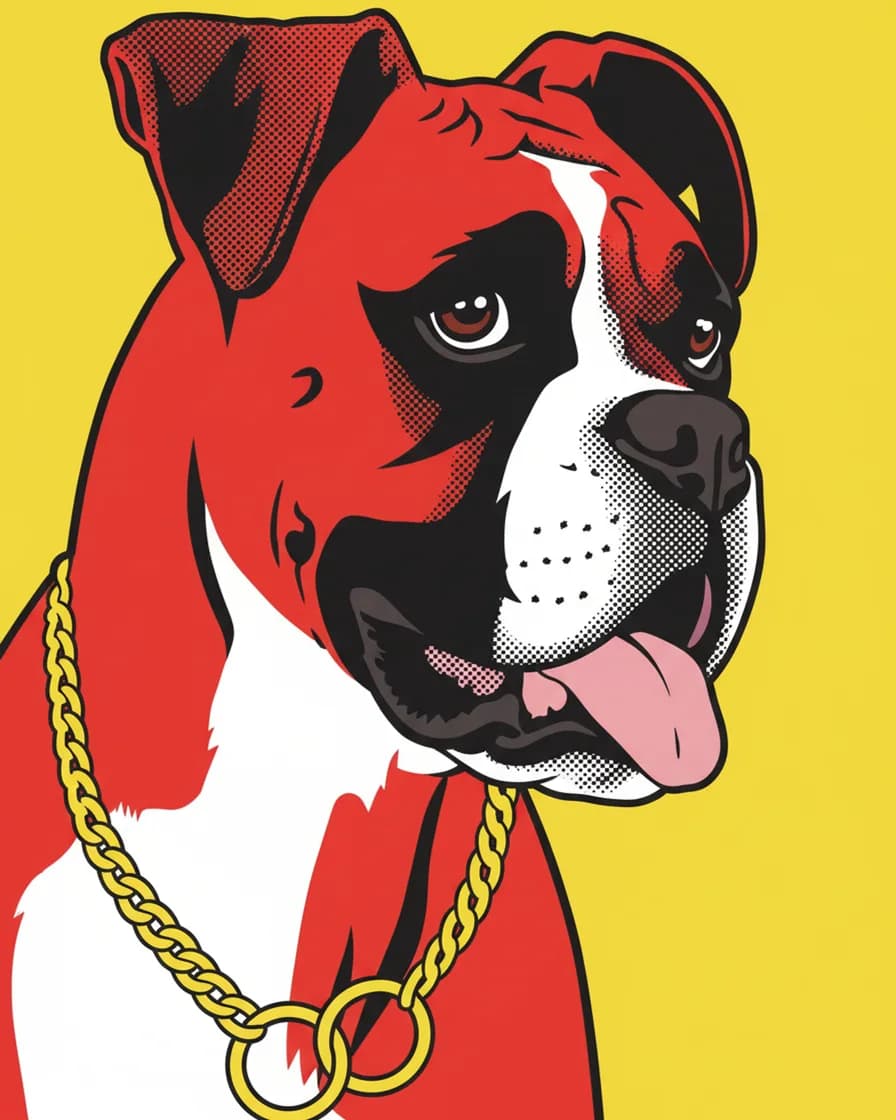
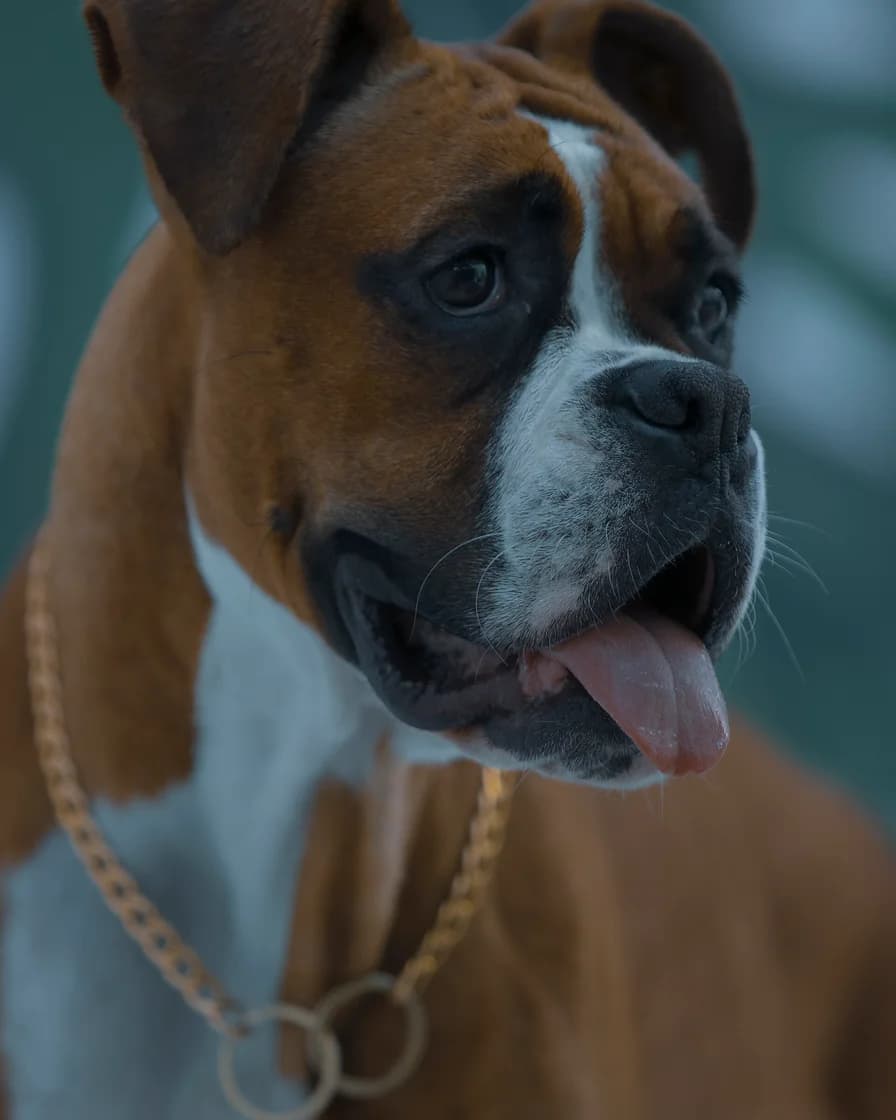
- Test photo
- Boxer dog photo, 1920 x 2880 px, 584 KB JPG
- Result
- Pop art portrait
- HD file
- 2048 x 2560 px JPG
- Print size at 256 dpi
- 8 x 10 in
- Free preview
- 1024 x 1280 px, watermarked
- Made by
- gemini-2.5-flash-image
- Style prompt
- 82 words
- HD file size
- 758 KB
How we test: every style gets the same two photos, and we compare each portrait with its photo by hand. More on the about page.
What the pop art pet portrait style does to a photo
The style prompt asks for a 1960s screen print with only four flat, loud colors. So soft fur shading goes away, and big blocks of color take its place.
Shadows turn heavy and black. In the mid tones, the painter adds halftone dots, the small dots that printing presses use for shading. Behind your pet sits one bright yellow background, which gives the picture its poster look.
Because the palette is loud, the coat may shift in color. In our test, a fawn Boxer came back bright red. However, the white chest, the dark mask and the ear shape stayed in place, so the dog was still easy to recognize.
Where the look comes from
Pop art took off in the 1950s and 1960s. Artists turned soup cans, comic panels and film stars into art. They also liked cheap printing methods, such as screen printing and halftone dots, because everyone knew them from newspapers and ads. That is why a pet in this style looks like a poster and not like a painting.
Photos that suit pop art
Strong contrast makes strong pop art. So choose a photo with clear light on one side of the face and real shadow on the other. Flat, gray light gives the black shadows nothing to hold on to.
Bold markings help as well. For example, a mask, a blaze or a patch over one eye turns into a clean block of color. Very fine patterns, such as ticking, tend to merge.
Next, check the outline. The head and ears should stand clear of the background, because the style draws a hard edge around them. As always, use one pet per photo.
Where to hang a pop art pet portrait
This style is loud on purpose. Therefore, it works best on a plain wall, in a hallway, an office or a game room. A thin black or white frame keeps the focus on the color.
The HD file measures 2048 x 2560 px, which prints at 8 x 10 inches at 256 dpi. Flat color and hard edges hold up well when you go larger. Still, 11 x 14 and 16 x 20 inches look softer up close, and the halftone dots lose some crispness.
It also makes a fun gift for a friend who would never hang a formal painting. We send a digital file only, so pick any print shop for the poster.
When a pop art pet portrait is not the right choice
Pop art cares about impact, not about fur. So if you want the true coat color, pick Oil painting or Watercolor instead. A memorial piece usually calls for a quieter style too, such as Soft pastel.
The yellow background never changes, and neither does the count of four colors. As a result, you cannot match the print to your sofa inside the tool. Finally, the model can change small details, such as a collar or the pattern of spots, so check the free preview first.
Pop art style facts
| Part of the picture | What you get |
|---|---|
| Look | 1960s screen print poster |
| Colors | Four flat, loud colors |
| Shadows | Heavy black |
| Mid tones | Halftone dots |
| Background | Single bright yellow |
| Shape | Vertical 4:5 |
| Free preview | 1024 x 1280 px WebP with a watermark |
| HD file | 2048 x 2560 px JPG, no watermark |
| Print size | 8 x 10 inches at 256 dpi |
| Upload | JPG, PNG or WebP, up to 12 MB |
Pop art pet portrait FAQ
What is a pop art pet portrait?
It shows your pet as a bold poster with a few flat colors, black shadows and halftone dots. The look copies the screen prints of the 1960s. Here, an image model draws it from your photo.
Is the pop art pet portrait free?
You can try it for free. Two free previews a day need no account and no card, and each one carries a watermark. After that, one credit returns the clean HD file.
Can I pick the colors?
No. The style prompt asks for four flat loud colors on a yellow background, and the model chooses them. So use a free preview to see what comes back.
Can I get a grid of four panels?
Not from one run. Each credit paints a single portrait in a 4:5 shape. So for a grid, you would need to combine files in an image editor yourself.
Will my pet keep its real coat color?
Often not, and that is part of the style. In our test, a fawn Boxer turned bright red. Still, the markings, the face shape and the ear shape stayed the same.
How large can I print it?
The HD file prints at 8 x 10 inches at 256 dpi. You can also go to 11 x 14 or 16 x 20 inches, although those prints look softer up close.
Does it work with cats?
Yes. The prompt keeps the species from your photo, so a cat stays a cat. Tabby stripes may turn into fewer, bolder bands, though.